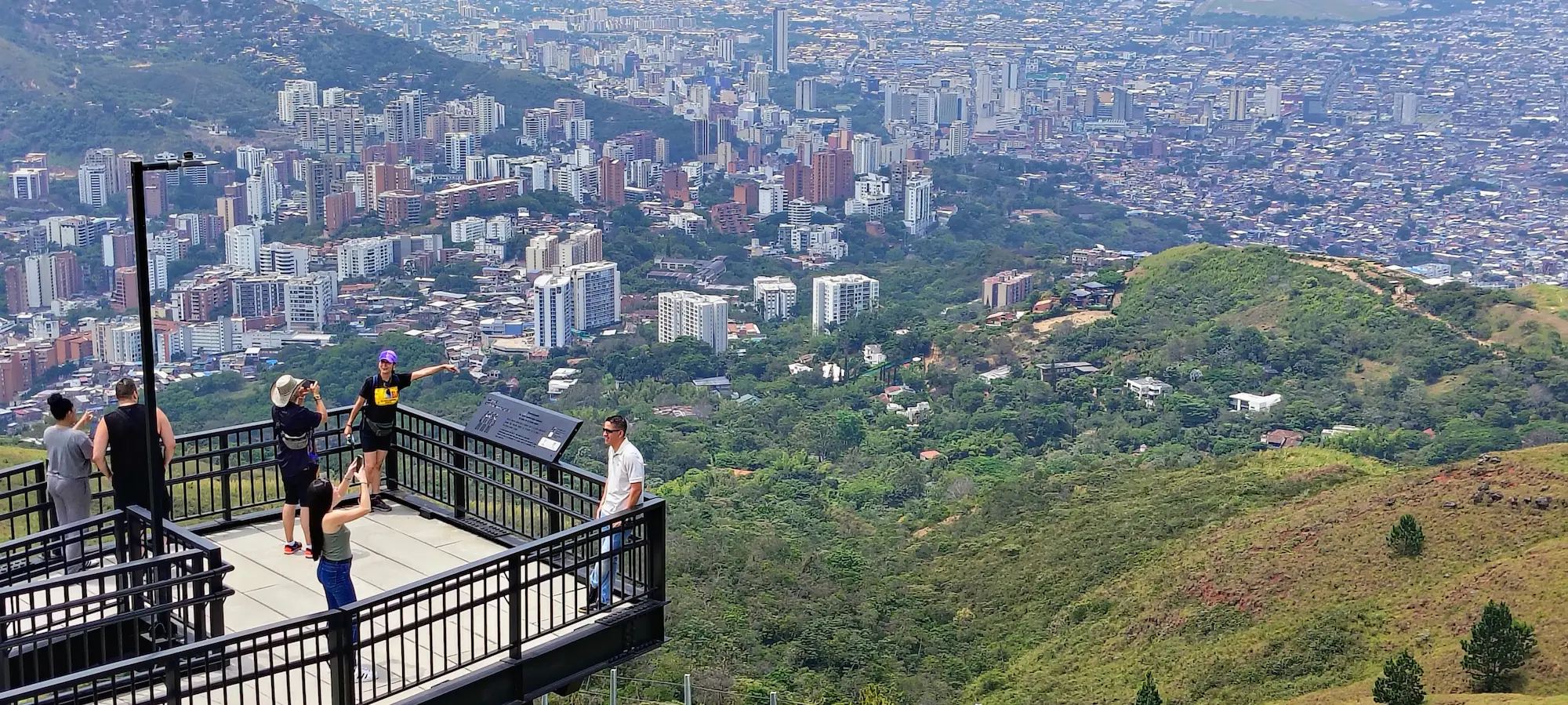
Cali, Colombia isn't the country's most visited city. It isn't particularly oriented around tourism. And that's exactly why so many travelers end up saying it became their favorite.
Known worldwide as the Salsa Capital of the World, Cali is a city with a personality of its own. Music is part of everyday life, strangers often greet each other with a smile, and local culture isn't something you have to search for—it surrounds you. For travelers willing to look beyond Colombia's better-known destinations, Cali offers a very different kind of experience.
This guide focuses on the things that genuinely make a difference when traveling to Cali for the first time: where to go, how to get around, what to expect, how to stay safe, and how to experience the city beyond the usual tourist checklist.
Everything We'll Cover
Everything you need to know before visiting Cali, from safety and salsa to food, coffee, transportation and unforgettable day trips.
Know Before You Go
Everything you should know before visiting Cali.
Is Cali Safe?
We debated whether this should appear at the beginning of the guide.
As locals, safety isn't something that dominates our everyday conversations. We go to work, meet friends, enjoy restaurants, dance salsa, hike in the mountains, and live our lives much like people do in any other large city.
But as local tour guides, we know that for many international travelers, this is the first question they have. In fact, it is often the reason they hesitate to visit Cali at all.
So rather than asking you to wait until the end of the guide, we'd rather address it right away.
The short answer: Cali is a city where travelers can have a great experience, but it's important to take safety seriously. Like other major cities in Colombia and Latin America, Cali has areas with very different security conditions. The precautions you take should depend on where you are, what time it is, and how you're getting around.
There are neighborhoods we'd recommend avoiding, just as there are neighborhoods we happily recommend to our own friends and family. There are times when taking an Uber is the smarter choice than walking, and there are areas where you'll find locals, families, cafés, parks, and people simply enjoying their day.
If you've only seen Cali through headlines or social media, it's understandable that you might have a very different picture in your mind. Headlines tend to focus on exceptional events, while everyday life is much less complicated than the news cycle suggests.
Our goal isn't to convince you that Cali is perfect. It isn't. No large city is. Our goal is to give you honest, practical advice so you can experience the city the way we do: with awareness, confidence, and an open mind.
Now that we've addressed the 'elephant in the room', let's get to the fun part: discovering why so many visitors leave Cali wondering why they didn't come sooner.
Many of our guests arrive in Cali with the same concern: safety.
Ironically, it's also the topic they talk about the least by the end of their trip.
Instead, they remember the salsa, the breezy afternoons, the people they met, the food, and the feeling of discovering a city that turned out to be very different from what they expected.

Why the World Calls Cali the Salsa Capital
Contrary to what many visitors believe, salsa was not born in Cali. By the time the genre reached Colombia, it had already emerged from a mix of Caribbean musical traditions, particularly Cuban forms, and was shaped by Puerto Rican and other Caribbean communities in New York during the 20th century.
What happened in Cali was something entirely different. The city didn't invent salsa: it made it its own. More importantly, it developed a distinctive way of dancing it, known today as salsa caleña.
Since salsa first arrived here, generations of caleños have continuously reinvented the dance, creating increasingly fast, creative and footwork-focused styles that you simply won't find anywhere else in the world. Watching a couple dance in Cali is very different from watching salsa in Cuba, Puerto Rico or New York.
We believe salsa found fertile ground in Cali during a period of profound social change. As thousands of people migrated to the city (especially Afro-Colombian communities from Colombia's Pacific region), the city's cultural identity evolved rapidly. Combined with Buenaventura, Colombia's main Pacific port and the gateway through which countless vinyl records entered the country, Cali developed an extraordinary connection with Afro-Caribbean music.
Cali didn't become the world's salsa capital because it produced the most famous salsa bands.
It became the world's salsa capital because it reinvented the way the world dances salsa.
Today, salsa is woven into everyday life. You'll hear it in taxis, neighborhood stores, family gatherings, cafés and parks. And if you happen to visit during late December, you'll experience the Feria de Cali, the city's biggest celebration and one of Colombia's most important festivals. For 5 days, Cali becomes a giant dance floor where locals and visitors celebrate the music that has shaped the city's identity for generations.
Beyond the dancers, Cali is also home to a remarkable community of melómanos: music lovers and vinyl collectors who have spent decades preserving, sharing and studying salsa recordings from across Latin America and the Caribbean. Their passion has helped keep the genre alive, influencing generations of dancers and making recorded music an essential part of Cali's salsa culture.
Whether you already dance or have never taken a single lesson, experiencing salsa in Cali is one of the best ways to understand the city itself. It isn't simply entertainment: it is one of the languages through which Cali expresses its history, diversity and personality.
Want to experience salsa with a local guide? We offer a private Salsa Tour that takes you behind the scenes of Cali's dance culture, including a beginner-friendly class and a visit to a traditional salsa club.
Nightlife in Cali
Cali may not have Colombia's most expensive nightlife scene, but it has something many visitors find more valuable: nightlife that is deeply connected to local culture.
Much of this culture comes from salsa. For generations, music and dancing have been part of everyday life, making nightlife feel less like an activity for visitors and more like a natural extension of the city's personality. Another reason is the region itself. For dozens of kilometers surrounding Cali, the landscape is dominated by sugar cane plantations, making Valle del Cauca one of Colombia's traditional producers of sugar cane spirits, especially aguardiente. Sharing a bottle with friends remains a common part of a night out.
Visitors are often surprised by how approachable locals can be. Caleños are generally warm, curious and genuinely interested in meeting people from other countries. Don't be surprised if someone asks where you're from or invites you to dance salsa. More often than not, they're simply being friendly.
Cali doesn't party for tourists.
Tourists are simply invited to join the party.
Like any large city, common-sense precautions still apply. Keep an eye on your belongings, avoid accepting drinks from strangers, and use trusted transportation late at night. Overall, Cali has a relaxed nightlife atmosphere.
Broadly speaking, you'll find two different nightlife experiences. One is spontaneous and very local: open-air venues, lively streets, salsa bars and neighborhoods where people naturally move from one place to another. The other is a more upscale scene, with elegant clubs, rooftop bars and stylish venues where people dress up and enjoy a more sophisticated atmosphere.
Some areas are naturally more popular with international visitors, while others remain almost entirely local. Both offer fantastic experiences for different reasons, and choosing where to go depends on the kind of night you're looking for.
What Nature Can You Experience Around Cali?
One of the biggest surprises for first-time visitors is how naturally Cali blends into its surroundings. While many cities treat nature as something you have to drive hours to reach, in Cali it simply becomes part of everyday life.
Cali sits in the Cauca River valley on the eastern slopes of Colombia's Western Andes, with the Pacific lowlands and rainforest of Valle del Cauca not far to the west — one of the most biodiverse places on Earth. Wildlife and green landscapes are an ordinary part of life for locals.
Every afternoon, usually past 4 p.m. and before dark, flocks of parrots and macaws fly across the city, filling the air with their unmistakable calls. Wherever there are tall palm trees, chances are you'll hear them. Colombia is home to more species of palm trees than any other country in the world, and Cali benefits from that extraordinary richness.
In Cali, nature isn't somewhere you go.
It's simply part of everyday life.
The Cali River flows directly through the city, and it's even home to a small population of wild river otters (something few visitors expect to find in the middle of a city of more than two million people).
Birdwatchers from around the world travel to Colombia, and Cali has quietly become one of the country's best gateways into that world. Within an hour from central Cali, the cloud forests of the Farallones de Cali National Park are home to extraordinary species, including the Multicolored Tanager, an endemic bird of Colombia. The region is also famous for its hummingbirds, with several species visible just a short drive from the city.
For locals, these mountains are more than a birdwatching destination. They're where people escape the tropical heat. After just a short drive up the mountains, temperatures drop dramatically, the air becomes cooler, and traditional countryside lodges offer one of the most peaceful experiences near the city.
Back in the city, the Cali Zoo sits in a leafy area and is home to a wide variety of Colombian wildlife.
No guide to nature around Cali would be complete without mentioning Pance. Every weekend, locals head to its crystal-clear mountain river to cool off, relax with family and friends, or, as many jokingly admit, recover from a Saturday night filled with salsa and aguardiente. The water is refreshing, coming directly from the streams flowing down from the mountains.
If you want to experience Pance without the logistics hassle, we run a Pance Waterfall Tour that includes transportation and a local guide.
And if you have an extra day, San Cipriano is one of the most unforgettable destinations in the region. Surrounded by dense tropical rainforest, this small village showcases why Colombia is considered one of the world's biodiversity hotspots. Birds such as the spectacular oropendola are commonly seen around the village, while rivers, jungle trails and the famous motorcycle-powered 'brujitas' rail carts create an experience unlike anywhere else.
Whether you're interested in birdwatching, waterfalls, hiking, cloud forests, mountain rivers or simply escaping the city for a few hours, Cali offers a side of Colombia that many travelers never expect to find.
Food in Cali, Colombia
If you're wondering what to eat in Cali, Colombia, the answer goes far beyond a list of traditional dishes. The food of Cali tells the story of the people who built the city: Indigenous communities, Spanish settlers, Afro-Colombian communities from the Pacific Coast, and generations of migrants who brought their own ingredients, techniques and traditions.
Valle del Cauca is one of Colombia's great agricultural regions, and Cali sits at the center of this extraordinary culinary crossroads. The result is a cuisine that is difficult to define with a single style. Instead, traditional Cali food reflects the geography and cultural diversity of southwestern Colombia.
Cali's cuisine isn't defined by a single tradition.
It's the result of centuries of cultures sharing the same table.
Traditional Food from Cali and Valle del Cauca
One of the strongest influences on local cuisine comes from the sugar cane plantations of Valle del Cauca. The region's long history of sugar cane production helped shape some of Cali's most beloved sweets and desserts.
Manjar blanco, a creamy milk-based sweet similar in some ways to arequipe (colombian dulce de leche), is one of the region's best-known traditional foods. Other local specialties include dulce cortado and desamargado, traditional sweets that are particularly associated with Christmas, family celebrations and the culinary traditions of Valle del Cauca.
These aren't simply desserts for tourists to try. They are foods that many caleños grew up eating at home and that continue to appear on family tables and during important celebrations.
Pacific Colombian Cuisine in Cali
Another essential part of understanding food in Cali is the city's connection with Colombia's Pacific Coast. Cali has received generations of migration from Pacific communities, particularly Afro-Colombian communities, and their influence is deeply embedded in the city's food culture.
This is especially noticeable in seafood. Pacific Colombian cuisine makes extensive use of fresh fish, shellfish, coconut, herbs and tropical ingredients, and dishes inspired by this tradition can be found throughout Cali.
Traditional markets such as Galería Alameda are particularly interesting places to experience this side of Cali's gastronomy. You'll find fresh ingredients, seafood, juices, prepared foods and restaurants serving dishes influenced by the Pacific region.
Want to explore the market with a guide who can translate and explain every ingredient? We offer a Galería Alameda Market Tour that includes tastings and a deep dive into Cali's culinary traditions.
This connection between Cali and the Pacific is one of the reasons the city's food scene feels so different from what many visitors experience in other parts of Colombia.
Tropical Fruits and Traditional Drinks
The biodiversity of southwestern Colombia also makes Cali an incredible place to discover tropical fruits that many international visitors have never tasted before.
Fruits such as chirimoya, naidí, motilón and cacao are part of the wider regional food culture, appearing in juices, desserts and other preparations. Some are familiar throughout Colombia, while others are much more closely associated with specific regions and ecosystems.
Two of the most iconic things to try in Cali are cholado and lulada.
Cholado is a colorful dessert made with shaved ice, fresh fruit, syrups and condensed milk. It's particularly popular on hot afternoons and is as much a part of Cali's street-food culture as it is a dessert.
Lulada is a refreshing drink made with fresh lulo, ice, sugar and condensed milk. The fruit is crushed rather than completely blended, giving the drink its characteristic texture. On a warm Cali afternoon, it is difficult to imagine a more local way to cool down.
Cali Street Food and Fritanga
If you want to understand everyday Cali Colombian food, don't limit yourself to restaurants. Some of the city's most beloved foods are inexpensive snacks that people eat throughout the day.
Cali's fritanga culture includes foods such as empanadas, marranitas, papa rellena and aborrajados. You'll find them in bakeries, neighborhood shops, markets and street-food stalls, often for just a few thousand pesos.
Marranitas, made with green (or ripe) plantain and pork, are a particularly distinctive specialty of Valle del Cauca. Aborrajados combine ripe plantain with cheese and a fried batter, creating the sweet-and-savory combination that characterizes so much of the region's comfort food.
And then there is the chuleta valluna: a breaded and fried pork cutlet that has become one of the best-known dishes associated with Valle del Cauca. It is simple, filling and very much part of the region's everyday food culture.
Cali's Bakeries, Restaurants and Modern Food Scene
Traditional food is only part of the story. Cali also has a growing restaurant scene where local ingredients and Colombian traditions are being reinterpreted in more contemporary ways.
You'll find everything from neighborhood bakeries and traditional lunch restaurants to specialty coffee shops, international cuisine, tasting menus and contemporary Colombian restaurants.
Some of the city's most interesting food neighborhoods include San Antonio, El Peñón, Parque del Perro, Granada and Ciudad Jardín. Each offers a different atmosphere, from casual local restaurants to more sophisticated dining experiences.
One of the great advantages of eating in Cali is value. A simple local meal can be remarkably affordable, while even higher-end restaurants are often considerably less expensive than comparable experiences in many North American or European cities.
Food as a Way to Understand Cali
Ultimately, the best food in Cali isn't necessarily found in the most famous restaurant or the most expensive neighborhood. Some of the most memorable things you'll eat may be a freshly fried empanada, a glass of lulada, a plate of chuleta valluna or a dessert bought from someone who has been making it the same way for decades.
Food is one of the easiest ways to understand Cali's history. Sugar cane connects the city to the agricultural valley surrounding it. Pacific seafood reflects generations of migration and Afro-Colombian culture. Tropical fruits connect Cali to the extraordinary biodiversity of southwestern Colombia. And street food shows how these traditions became part of everyday life.
So if you're asking what to eat in Cali, Colombia, don't think of the answer as a checklist. Come hungry, explore the markets and neighborhood restaurants, try things you don't recognize, and let the city's food tell you a little about where it came from.
Afro-Colombian Culture
It is impossible to understand Cali without understanding its Afro-Colombian heritage. The city is home to one of the largest Afro-descendant urban population in Colombia (and in Latinamerica) by absolute number, making Black culture not a niche or minority expression, but one of the foundations of everyday life.
For many visitors from the African diaspora, especially from North America and the Caribbean, this creates an immediate sense of familiarity. It is common to hear visitors say that Cali is one of the few places where they feel they can blend in rather than stand out.
To understand Cali...
...you first have to understand its Afro-Colombian soul.
Diversity is simply part of everyday life here. Music, language, dance, cuisine and even humor have all been profoundly shaped by Afro-Colombian communities, particularly those whose families migrated from Colombia's Pacific Coast throughout the twentieth century.
Locals recognize a famous phrase from the classic salsa song "Sin negro no hay guaguancó", recorded by the Lebrón Brothers on their album Criollo.
Literally, the phrase means "Without Black people there is no party." But in Cali, the idea carries a much deeper cultural meaning: Afro-descendant communities have played a fundamental role in shaping the music, dance, food and social culture that make the city what it is today.
Cali's Afro-descendant population traces its roots back centuries to the colonial period and the transatlantic slave trade. Much of their original African heritage was intentionally suppressed during colonization, yet countless traditions survived and evolved. They remain visible today in music, dance, food, language, spirituality and countless everyday customs.
Their influence extends throughout the city, but becomes especially visible in eastern Cali, where many neighborhoods have predominantly Afro-Colombian populations and where cultural traditions continue to thrive through music, family life and community celebrations.
Whether you're dancing salsa, listening to Pacific music, enjoying traditional seafood or simply walking through the city, you're experiencing a culture that has been profoundly shaped by generations of Afro-Colombians whose contributions continue to define Cali's identity.
Where to Stay in Cali
Choosing where to stay in Cali is probably one of the most important decisions you'll make before your trip. The city has more than two million inhabitants, and the overwhelming majority of its neighborhoods are residential, where everyday local life unfolds far away from the tourist areas.
That creates two very different experiences. You can stay in Cali's traditional visitor neighborhoods, where restaurants, museums, nightlife and historic landmarks are often within walking distance. Or you can choose a more residential area, offering a much more authentic local experience, usually at a lower price, but requiring Uber rides to reach most attractions.
The best neighborhood doesn't exist.
The best neighborhood depends entirely on the kind of trip you want to have.
Historic Cali
For most first-time visitors, this is where we'd recommend staying. San Antonio, El Peñón and Granada form the traditional tourist heart of the city, combining history, restaurants, nightlife, boutique hotels and easy access to many of Cali's main attractions.
San Antonio is perhaps Cali's most iconic neighborhood. Colonial houses, quiet streets, cafés and panoramic viewpoints create one of the city's most charming atmospheres. A large concentration of backpacker hostels are located here, alongside beautiful Airbnbs and boutique hotels.
El Peñón, immediately next to San Antonio, feels slightly more modern. Here you'll find international restaurants, cocktail bars, upscale accommodation and some of Cali's best hotels and Airbnbs.
Granada is another favorite. Walkable and filled with restaurants, cafés, boutique hotels and nightlife, it also hosts international hotel chains together with excellent independent hotels.
Best for: First-time visitors • Walkability • Restaurants • Salsa • Nightlife
Medical & Luxury Cali
Ciudad Jardín & Pance are particularly popular with visitors looking for upscale accommodation and travelling to Cali for dental treatments or medical tourism. It is home to numerous private clinics, luxury restaurants, shopping malls and elegant residential developments.
Unlike Historic Cali, however, Ciudad Jardín & Pance are built around the car. Distances are much greater, making Uber almost essential for sightseeing. On the other hand, it offers quick access to Pance river, waterfalls, the mountains of the Farallones de Cali National Natural Park, prestigious universities and event venues.
The area is also known for its large mansions, some of which have been transformed into luxury hotels, recovery houses and wellness facilities.
Best for: Medical tourism • Luxury • Families • Longer stays
Local Favorites
If you've already visited Cali once (or simply want to experience the city like a local) neighborhoods such as San Fernando, Santa Teresita, area around Parque del Perro, Versalles and Centenario offer an excellent balance between local life and proximity to the city's attractions.
These neighborhoods feel less touristy while remaining conveniently located. You'll find charming boutique hotels, excellent restaurants, parks and cafés without the crowds of San Antonio or Granada.
Versalles and Centenario offer excellent options both from international to local hotels. Nearby Chipichape Shopping Mall also hosts two of Cali's largest hotels.
Tequendama deserves a special mention thanks to its proximity to the Coliseo del Pueblo, the Petronio Álvarez Festival, the World Salsa Festival, Cali Fair and Mall Plaza.
Best for: Returning visitors • Digital nomads • Local atmosphere
Residential Cali
Many neighborhoods across northern, central and southern Cali offer a wonderfully authentic experience for visitors staying several weeks or even months. Areas such as La Flora, Prados del Norte, Alameda, Colseguros, El Ingenio, El Refugio and Cuarto de Legua provide excellent value and allow you to experience daily life far from the traditional tourist circuit.
Accommodation is often more affordable, although you'll likely spend more on Uber rides as most attractions are not within walking distance.
Best for: Long stays • Living like a local • Budget-conscious travelers
Areas We Don't Recommend for First-Time Visitors
Like any large city, some neighborhoods are simply better suited for visitors than others. For first-time visitors, we generally wouldn't choose accommodation in Downtown, Siloé, Meléndez or much of eastern Cali unless you have a specific reason to stay there or are familiar with the area. These areas can certainly be visited, but they are less convenient bases for most first-time travelers.
How to Get Around Cali, Colombia
Getting around Cali, Colombia is easier than many first-time visitors expect. The city has no metro or passenger train, but you can combine walking, taxis, ride-hailing apps and the MIO public transportation system depending on where you're staying and how much time you have.
For most travelers, the simplest combination is walking in the traditional tourist neighborhoods and using Uber or another ride-hailing app for longer journeys between neighborhoods.
Is Uber Available in Cali, Colombia?
Yes. Uber is widely used in Cali, and ride-hailing is one of the most convenient ways for international visitors to get around the city.
Uber operates in a complicated legal environment in Colombia. The issue is primarily the legal status of the vehicle providing the ride: Colombian regulations distinguish between private and public transportation, while ride-hailing platforms commonly connect passengers with privately registered vehicles.
In everyday life, however, ride-hailing apps are extremely common. You may also see drivers using DiDi or inDrive. No single app is always the cheapest or fastest, so comparing prices and availability can be worthwhile.
One local custom may surprise you. Your driver may ask you to sit in the front passenger seat. This is related to the complicated regulatory environment surrounding app-based transportation and is intended to reduce the driver's risk during traffic checks.
Don't take it personally if you're asked to move forward. It's a fairly common practice.
One practical warning: don't request your ride at the last possible minute. Finding a driver can take as long as 15 minutes, even when it's not rush hour. If you have a tour, restaurant reservation, appointment or flight connection, give yourself some extra time.
My local rule after years of guiding:
If you have somewhere important to be, budget time to find the car, not just time for the drive.
Taxis in Cali
Taxis are everywhere in Cali and remain a normal and legitimate way to get around. Locals use them every day, and they can be particularly useful when you need a car immediately.
Taxis use a taximeter, although legally established surcharges can affect the final fare. For visitors, the main advantage of using an app instead is price and trip transparency: you can normally see the route, fare information and payment method before or during the journey.
You can hail a taxi on the street, but international visitors may find ride-hailing apps easier to navigate, particularly if they don't speak much Spanish.
Walking Around Cali
Cali is very walkable in the right neighborhoods. If you're staying in San Antonio, El Peñón or Granada, many restaurants, cafés, bars, parks and attractions are close enough to reach on foot.
This is one of the biggest advantages of staying in the traditional visitor areas. You can spend part of the day exploring on foot and then use a ride-hailing app when you need to cross the city.
Farther south, particularly around Ciudad Jardín and Pance, the experience is different. Distances are greater and the neighborhoods are much more car-oriented.
How Does the MIO Work?
The MIO is Cali's integrated public transportation system and the city's main public bus network. It includes dedicated bus corridors and stations connecting large parts of Cali.
Visitors can use a traditional MIO card, or, where supported, pay by tapping a contactless Visa or Mastercard on the validator.
You don't need to understand the entire network before using it. Google Maps can be particularly useful for finding MIO routes, stations and transfers: enter your destination, choose public transportation and follow the suggested route.
The main disadvantage is travel time. A journey that takes relatively little time by car can take considerably longer on the MIO when waiting and transfers are included.
If you're staying in Cali for several days and want to experience the city more like a local, using the MIO can be an interesting part of the experience. For a short trip, however, many visitors will prefer the convenience of ride-hailing.
Is Public Transportation Safe in Cali?
The MIO is part of everyday life for millions of people in Cali, but visitors should use the same precautions they would use on public transportation in any large Latin American city.
Keep your phone and valuables secure, particularly in crowded stations and buses, avoid displaying expensive belongings and pay attention to your surroundings. At night, many visitors will find a ride-hailing app more convenient than waiting for public transportation or walking long distances.
Safety also depends heavily on where you are going and when. There isn't a single rule that applies to every neighborhood or every time of day.
A useful local principle:
Choose your transportation based on the neighborhood, the time of day and how familiar you are with the area.
How to Get from Cali Airport to the City
Alfonso Bonilla Aragón International Airport (CLO), Cali's main international airport, is actually located outside the city near Palmira.
There is no airport metro or passenger train connecting the airport directly with Cali. Public and shared transportation options are available, but routes and fares can change, so travelers carrying luggage will generally find a taxi or ride-hailing service more convenient.
Official airport taxis are readily available. Uber pickups are also possible, although the exact pickup procedure can depend on the airport's current arrangements and your driver.
Don't be surprised if transportation to and from the airport costs noticeably more than a typical ride within Cali.
Getting Around Cali from Ciudad Jardín and Pance
If you're staying in Ciudad Jardín or Pance, transportation deserves some extra planning.
These southern areas are popular with visitors staying longer, people coming for medical or dental treatment, families and travelers looking for a quieter environment close to nature. They are also considerably farther from the traditional tourist areas than San Antonio, El Peñón and Granada.
Cali may not look enormous on a map, but traffic can make journeys much longer than the distance suggests. An activity that looks "close" geographically may still require a substantial drive.
If you're staying in Ciudad Jardín or Pance, check the actual travel time to your tours and activities before booking accommodation. This is particularly important if you have early-morning departures or several activities planned across different parts of the city.
Should You Rent a Car in Cali?
Yes, you can rent a car in Cali but most short-term visitors don't need one.
International rental companies operate in the city, and having your own vehicle can be useful for longer stays or trips into the surrounding countryside.
Within Cali itself, however, traffic can be challenging. Motorcycles are common, lane discipline may feel different from what you're accustomed to, and parking can become an additional headache.
For travelers who have never driven in Colombia, the convenience of having a rental car may not outweigh the stress of navigating an unfamiliar driving environment.
For most visitors staying only a few days, walking and ride-hailing apps will usually be simpler and more convenient.
So, What's the Best Way to Get Around Cali?
There isn't one transportation option that works for every traveler. Your best choice depends mainly on where you're staying and how much time you have.
Walking is ideal in San Antonio, El Peñón and Granada.
Uber and other ride-hailing apps are generally the easiest way to move between neighborhoods.
Taxis are widely available and useful when you need immediate transportation.
The MIO is affordable and extensive, but usually slower.
Renting a car makes more sense for longer stays and trips outside the city than for a short urban visit.
For most first-time visitors to Cali, we'd recommend keeping it simple: walk when you're in a good neighborhood for walking and use ride-hailing when you're not.
How Many Days Should You Spend in Cali, Colombia?
You can get a taste of Cali in one day, and many travelers actually do. After years of working in tourism, I've learned that spending only one or two days in Cali is surprisingly common, especially for visitors following a larger Colombia itinerary.
Personally, I don't think one day is enough to really experience the city. Even two days can feel short. But I also don't want to pretend that every traveler needs five days in Cali. For a first visit, three days is the sweet spot I'd recommend.
Three days gives you enough time to experience Cali's historic neighborhoods, food, salsa and nightlife while still leaving room for the mountains, rivers or one of the natural experiences that make the city so different from other destinations in Colombia.
Here's how we'd actually use your time depending on how many days you have.
One Day in Cali
With only one day, you'll need to be selective. Fortunately, Cali's combination of city and nature makes it possible to experience a surprising amount in a short time.
Start around 8 a.m. at Galería Alameda, one of the city's most interesting traditional markets. It's a great introduction to Colombian fruits, local ingredients and the everyday food culture of Cali.
From there, head toward Pance and spend the late morning visiting the Indio Waterfall. Cool off in the mountain river before having a traditional sancocho de gallina for lunch at El Portal de Pance.
After lunch, return toward the city for an afternoon of culture. Depending on your interests, you could visit the Jairo Varela Museum or the Museo de la Salsa, before heading up to Cristo Rey in the late afternoon for sunset and one of the best views over Cali.
Finish the day with dinner in San Antonio. If you're visiting on a weekend, continue toward the Bulevar del Río and the Calle de la Salsa, or experience one of Cali's many salsa clubs and nightlife venues.
One day can work. It just won't give you much room to slow down.
If you'd rather have someone organize the logistics, our Galería Alameda Tour, Pance Waterfalls Tour, Cristo Rey City Tour and Salsa Tour can be combined to create a very full first day.
Two Days in Cali
Two days gives you considerably more breathing room and is probably the most common length of stay we see among travelers passing through Cali.
Spend your first day exploring the city itself: its historic neighborhoods, local food, viewpoints, museums and salsa culture. Save the evening for dinner and nightlife, particularly if you're visiting on a Friday or Saturday.
On your second day, add one of the experiences that best demonstrates just how close nature is to Cali. You could visit the cloud forest of the Farallones de Cali National Natural Park, visit a hummingbird sanctuary, or explore the mountains and rivers around Pance.
Two days can give you a good introduction to Cali. You'll still have to leave some things for another trip.
Three Days in Cali: The Sweet Spot
Three days is what we'd recommend for most first-time visitors.
It gives you enough time to experience the city's main cultural highlights without turning the trip into a checklist. You can spend one day getting to know Cali itself, another exploring nature or the mountains, and a third slowing down and discovering some of the city's food, neighborhoods and nightlife.
This is also where Cali starts to feel different from a quick stop on a Colombia itinerary. You have time to take a salsa class, spend an afternoon in San Antonio, discover a local market, revisit a restaurant you enjoyed, or simply leave a few hours unscheduled.
If you're interested in food and drink, the third day is also a good opportunity to explore some of the culinary traditions of Valle del Cauca through a chocolate experience, coffee excursion or regional food experience.
Four Days in Cali
Four days is ideal if you want to add a full-day excursion beyond the immediate surroundings of Cali.
One option is San Cipriano, a small Pacific rainforest community famous for its rivers, jungle and unusual motorbike-powered rail carts known as brujitas.
During whale-watching season, generally from August through October, you could instead spend the day heading toward Colombia's Pacific coast to look for humpback whales.
Another possibility is a coffee experience farther north in Valle del Cauca or toward Colombia's Coffee Region. These trips involve more travel, but can be worthwhile if coffee culture is one of your main interests.
Five Days or More
Five days or more is certainly enough to enjoy Cali at a slower pace, but I wouldn't consider it necessary for a first visit.
At this point, you can start exploring some of the city's less conventional experiences: visit Torre de Cali, explore community tourism in Comuna 20, or spend a day outside the city enjoying water sports such as jet skiing at Lake Calima.
The surrounding region also offers activities such as ATV and buggy excursions, paragliding and other outdoor adventure experiences.
More time is particularly valuable if you don't like rushing. You can spend a day exploring Cali's neighborhoods, another in the mountains, another discovering regional food and drink, and still have your evenings free for salsa and nightlife.
Our honest recommendation:
One day gives you a taste of Cali. Two days give you a good introduction. Three days is the sweet spot. Anything beyond that is about slowing down or exploring the incredible region around the city.
If Cali is part of a larger Colombia itinerary, three days is an excellent target. If you only have one or two days, don't skip the city just because you can't stay longer. Cali is worth experiencing even on a short visit — just know that you'll be seeing a concentrated version of it rather than the whole picture.
Looking for Things to Do in Cali?
We've spent years showing visitors around Cali, from salsa clubs and local markets to mountain rivers, waterfalls and the city's best viewpoints. If you're looking for experiences rather than just a list of attractions, take a look at the tours we offer.
Explore Our Cali Tours →Weather & Best Time to Visit Cali, Colombia
One of the great privileges of living in the tropics is that Cali doesn't really have "seasons" in the way most visitors from Europe, North America or the Southern Hemisphere understand them.
Cali sits close to the Equator, at roughly 1,000 meters above sea level. The result is a remarkably stable climate throughout the year. Temperatures change relatively little from one month to another, while rainfall is what really determines the difference between one part of the year and another.
In other words: you don't come to Cali for winter, spring, summer or fall. You come to Cali for the dry season or the rainy season.
Cali Has Two Rainy Seasons
Cali's rainfall follows a bimodal pattern, meaning that the city experiences two wetter periods and two relatively drier periods every year.
The first rainy season generally peaks around April and May. The second, usually more pronounced, occurs around October and November. The relatively driest stretch is generally June through August, with another comparatively drier period around January and February.
Historical climate normals show a meaningful difference between the wetter and drier parts of the year. Depending on the station and dataset, Cali receives roughly 75 to 130 mm of rain in some of its drier months, while some of the wettest months receive more than 200 mm. November is consistently among the wettest months in long-term climate datasets.
April rains and October storms are not just local sayings.
Cali really does have a bimodal rainfall pattern. The funny part is that locals barely think about it.
How Much Does the Temperature Actually Change?
Not much.
That's one of the strangest things about Cali's climate for visitors coming from places with four distinct seasons. Long-term climate normals show only relatively small changes in average temperature throughout the year.
The practical result is simple: you can wear summer clothes in Cali all year.
Shorts, T-shirts, light dresses and sandals are perfectly normal at any time of year. Just remember that some nightclubs have dress codes and may not allow shorts, particularly more upscale venues.
What changes more noticeably is how often rain interrupts your plans.
When It Rains in Cali, It Really Rains
There are two types of rain that visitors quickly learn to recognize.
The first is the slowly announced rain. The sky becomes progressively darker, clouds cover the city and you can usually tell what's coming. Eventually it starts raining and may continue for an hour or several hours.
Then there is the Cali aguacero.
You can be walking under bright sunshine, watching a completely blue sky, and fifteen minutes later the city is being hammered by rain. Twenty or thirty minutes later, the storm can be gone and the sun can be shining again as if nothing happened.
A local observation:
In Cali, "rainy today" doesn't necessarily mean "rainy where you're going."
You can have a serious downpour in one part of the city while another neighborhood a few blocks away stays completely dry.
Should You Trust the Weather Forecast?
Yes. But don't take it too literally.
If your weather app says there is an 80% chance of rain, that does not mean Cali will necessarily spend 80% of the day under a rainstorm. The forecast describes atmospheric conditions and probabilities over an area, while Cali's actual rainfall can be remarkably localized.
Locals have traditionally been much less obsessed with checking the forecast than visitors are. We tend to look outside, look at the sky and make a decision.
After living here for years, you start recognizing the clouds.
Rain Can Change Your Plans
Cali's rainy periods can have a real effect on tourism because many of the city's most memorable experiences happen outdoors. Street food, outdoor nightlife, salsa in the street, walking tours, viewpoints, rivers and mountain excursions are all much more enjoyable when the sky cooperates.
A heavy evening storm can completely change the atmosphere of the city, particularly for outdoor nightlife.
This is one reason the wetter months can be slower for tourism and may sometimes offer better prices on flights and accommodation.
The Best Time to Visit Cali Isn't Only About the Weather
If your priority is simply having the best chance of dry weather, the relatively drier periods are the obvious choice. But after years of working in tourism, I'd give visitors one piece of advice that has very little to do with rainfall:
Come to Cali for a weekend.
Even if you're not a party person, Cali is a very different city after dark. Salsa, music, street life and nightlife are not simply extras here — they are an important part of the city's identity. Places such as the Calle del Sabor, the Bulevar del Río and the city's salsa venues can feel completely different on a busy Friday or Saturday night.
If you can choose your dates, I would go one step further and try to visit around a payday weekend — roughly the weekends around the middle or end of the month. Many Colombians are paid on a quincenal schedule, commonly around the 15th and 30th, although exact payment dates vary by employer.
You don't need to be a serious clubber to notice the difference. When people have money to go out, restaurants fill up, bars become livelier and the streets around Cali's nightlife districts have a different energy.
If you genuinely have no interest whatsoever in nightlife, salsa, evening street life or going out after dark, then this advice doesn't really matter. In that case, choose your dates based on weather, festivals and the activities you want to do.
My local rule:
If you want to understand Cali after dark, don't come on a Tuesday. Come on a weekend — preferably when people have just been paid.
Cali's Biggest Events
For many visitors, the calendar of events matters just as much as the weather.
August is particularly interesting because of the Petronio Álvarez Festival, one of Colombia's most important celebrations of Pacific and Afro-Colombian culture.
Usually September brings the World Salsa Festival and the beginning of the second major rainy period, making it a fascinating month for visitors who want to experience Cali's salsa culture at its fullest.
And then there is December.
The final week of the year brings the Feria de Cali, when the city essentially turns into one enormous celebration of salsa, music, dancing and street culture. For many visitors, this is the single most exciting time of year to experience Cali.
Nature Has Its Own Calendar
There is also an important seasonal contradiction: some of the best nature experiences around Cali become more interesting precisely during the wetter months.
Whale watching along Colombia's Pacific coast, for example, takes place during the rainy season, with the main season generally running from roughly July through October and peak activity around September and October.
So there isn't really one universally "best" month to visit Cali.
The local answer:
Come during the drier months if you hate rain. Come during the wetter months if you want the mountains, rivers and Pacific coast at their most alive. Come on a weekend if you want to experience Cali after dark. And come in December if you want to understand what Cali means by "party."
```What Should You Pack for Cali?
Think summer wardrobe first.
Light clothing works year round. During the wetter months, add a compact umbrella and shoes that can handle getting wet. A light jacket can also be useful in the mountains or on cooler evenings.
And if nightlife is part of your trip, bring at least one outfit that doesn't involve shorts. Some of Cali's clubs and upscale nightlife venues have dress codes.
How Much Does It Cost to Visit Cali?
Cali can be a relatively affordable city to visit, but how much you spend depends heavily on your travel style, where you stay and how much you choose to eat, drink and explore.
Rather than giving fixed prices that can quickly become outdated, here's a more useful way to think about the cost of a trip to Cali.
Budget Travel
Travelers on a tighter budget can find good-value accommodation in areas such as San Antonio and San Fernando.
Hostels are often the easiest option for keeping accommodation costs down while still having a social experience. Some Cali hostels also offer beginner salsa classes, which can be a particularly good way for solo travelers to meet people and get introduced to the city's nightlife.
For food, look for a local corrientazo, the traditional affordable lunch menu found throughout the city. Neighborhood bakeries, local markets and smaller restaurants are also useful options when you want to eat well without spending much.
Staying in a walkable neighborhood can also reduce your transportation costs, particularly if you plan your days around nearby attractions and restaurants.
Comfortable Travel
With a moderate travel budget, you can stay in a comfortable hotel or well-located apartment and enjoy a much wider choice of restaurants, cafés, nightlife and activities without needing to plan every expense carefully.
Areas such as San Antonio, El Peñón, Granada and San Fernando offer a useful balance between location, comfort and access to the city. Ride-hailing apps also make it relatively easy to move around without renting a car.
This is probably the sweet spot for many international visitors: comfortable accommodation, excellent local food, regular transportation and several activities without needing a luxury-level budget.
Higher End Travel
Cali also has a well-established higher-end hotel, restaurant and nightlife scene.
Areas such as Granada, El Peñón, Ciudad Jardín and Pance offer everything from international hotel chains and boutique properties to upscale restaurants, cocktail bars, spas and high-end apartments.
International hotel brands are present alongside independent properties, while the city's better-known restaurants and cocktail bars provide plenty of options for travelers who prefer a more polished experience.
At this level, transportation is usually straightforward: ride-hailing apps and authorized taxis make it easy to move between neighborhoods, restaurants and nightlife venues.
The biggest local budgeting tip:
You don't need a luxury budget to experience Cali comfortably.
One of the city's advantages is the range of experiences available at different spending levels. You can eat at neighborhood restaurants one day, visit a higher-end restaurant the next, and choose between simple and more elaborate experiences throughout your trip.
Things You'll Thank Us For Later
Cali is a welcoming city, but every destination has its own rhythms, habits and little details that aren't obvious to first time visitors.
After years of showing international travelers around Cali, these are some of the things we wish everyone knew before arriving.
Keep It Simple
You don't need to dress like you're going on safari. Most locals keep things relatively casual, and keeping valuable jewelry, expensive watches and large amounts of cash out of sight is simply good city etiquette.
Colombians have a great expression for this: dar papaya. Roughly translated, it means not giving someone an unnecessary opportunity.
Carry a Little Cash
Cards are widely accepted in Cali, but cash still makes everyday life easier.
Street food, neighborhood bakeries, local markets and many small businesses may prefer Colombian pesos. Carrying around COP 50,000 to 100,000 in smaller bills is usually plenty for everyday expenses.
Smaller denominations are particularly useful. A COP 100,000 bill can be surprisingly difficult to change when you're buying a COP 5,000 snack.
Keep Your Passport Somewhere Safe
There is usually no reason to carry your original passport around the city all day.
Keep it safely stored at your accommodation and carry a secure digital copy or photocopy of your identification and Colombian entry information instead. If you're unsure what identification you should carry for a particular situation, ask your accommodation or guide.
Let Locals Know You're New Here
One of the easiest ways to connect with people in Cali is also one of the simplest: say hello.
Buenos días, buenas tardes, gracias and hasta luego go a surprisingly long way.
Caleños are generally curious about visitors, and mentioning where you're from will often start a conversation. Don't be surprised if someone at a salsa club wants to know your name, where you're from or whether you can dance.
Learn a Little Spanish
English is still relatively uncommon in Cali compared with some of Colombia's more established tourist destinations.
You don't need to become fluent. A handful of Spanish phrases and a translation app can completely change the ease of your trip.
And locals genuinely appreciate the effort.
Give Cali a Weekend
If you can choose your dates, try to include at least one Friday or Saturday night.
Cali's social life revolves heavily around the weekend. Salsa, live music, nightlife, restaurants, street food and neighborhood gatherings become much more active from Friday onward.
You can visit Cali during the week and have a great time. But if you leave before the weekend, you may leave without ever seeing the city's full energy.
A local rule:
Cali doesn't sleep early. It wakes up after work.
Follow the Sun
Cali is warm year round, but the midday sun can be surprisingly intense.
If you're planning a long walk or outdoor activity, mornings and late afternoons are usually much more comfortable. Save the hottest part of the day for lunch, museums, cafés or a slower pace.
Time Your Hikes
Cali's mountains are incredibly close to the city, but outdoor activities are better when you respect the rhythm of the environment.
For popular hikes such as Tres Cruces, early morning is generally the best choice. Start before the sun becomes intense and you'll have a cooler, more enjoyable experience.
For less familiar trails and mountain areas, going with someone who knows the area is always the smarter option.
Plan Your Way Back
Getting to Cali's surrounding nature is often easy. Getting back isn't always quite as simple.
Places such as Cristo Rey, Pance and Kilómetro 18 can have fewer available ride-hailing vehicles, particularly at certain times of day.
If you're heading somewhere outside the main urban areas, think about your return journey before you leave. Sometimes arranging transportation in advance is the difference between ending the day relaxed and standing on the side of a mountain waiting for a car.
Leave Some Room for Improvisation
This might be the most important tip of all.
Don't schedule every hour of your trip.
Cali rewards curiosity. A restaurant recommendation from a local, an unexpected salsa invitation, a neighborhood you hadn't planned to visit or a conversation that lasts longer than expected can easily become one of the highlights of your trip.
One last piece of advice:
Smile, greet people, ask questions, dance even if you're terrible at it, and give Cali enough time to surprise you.
The city's greatest attraction isn't a monument. It's the people.
Frequently Asked Questions About Cali
Quick answers to the questions we hear most often from travelers visiting Cali, Colombia for the first time.
Is Cali, Colombia worth visiting?
Yes. Cali is particularly worth visiting if you're interested in salsa, local culture, food, nightlife and easy access to mountains, rivers and biodiversity. It's a less conventional choice than Cartagena or Medellín, but that's part of its appeal.
How many days should you spend in Cali?
We recommend three to five days for a first visit. One or two days can work if Cali is part of a larger itinerary, while five days or more gives you time for both the city and longer regional excursions.
Is Cali expensive to visit?
Cali is generally a good-value destination, with affordable options for accommodation, food and transportation at almost every budget level.
Is Cali safe for tourists?
Cali requires normal big-city precautions, particularly at night. Choosing your neighborhood carefully, using reliable transportation and keeping valuables discreet are the main things we recommend to visitors.
Can you drink tap water in Cali?
Yes. Cali's municipal tap water is generally considered safe to drink, and many locals drink it every day. Bottled or filtered water is also widely available if you prefer it.
Do I need cash in Cali?
It's a good idea to carry some Colombian pesos. Cards are widely accepted, but cash remains useful for street food, markets, bakeries, small businesses and other everyday purchases.
Is Uber available in Cali?
Yes. Uber is widely used in Cali, alongside apps such as DiDi, inDrive, Yango and Cabify. Waiting times can vary, so allow extra time when you have an important appointment or reservation.
Do people speak English in Cali?
English is not widely spoken outside the tourism and hospitality sectors. Learning a few basic Spanish phrases and having a translation app will make your trip considerably easier.
What is the best time of year to visit Cali?
Cali can be visited year round. The relatively drier periods are generally better for outdoor activities, while August, October and late December are especially interesting because of major cultural and salsa events.
What is Cali famous for?
Cali is best known as the Salsa Capital of the World. It's also known for its Afro-Colombian culture, distinctive food, nightlife and unusually close connection to the mountains, rivers and biodiversity surrounding the city.
Is Cali good for solo travelers?
Yes. San Antonio, El Peñón and Granada are popular choices for solo travelers because they are relatively walkable and have plenty of restaurants, nightlife and accommodation options.
Is Cali good for a first trip to Colombia?
It depends on your interests. If salsa, nightlife, Afro-Colombian culture, food and nature appeal to you, Cali can be an excellent introduction to Colombia beyond its more established tourist destinations.